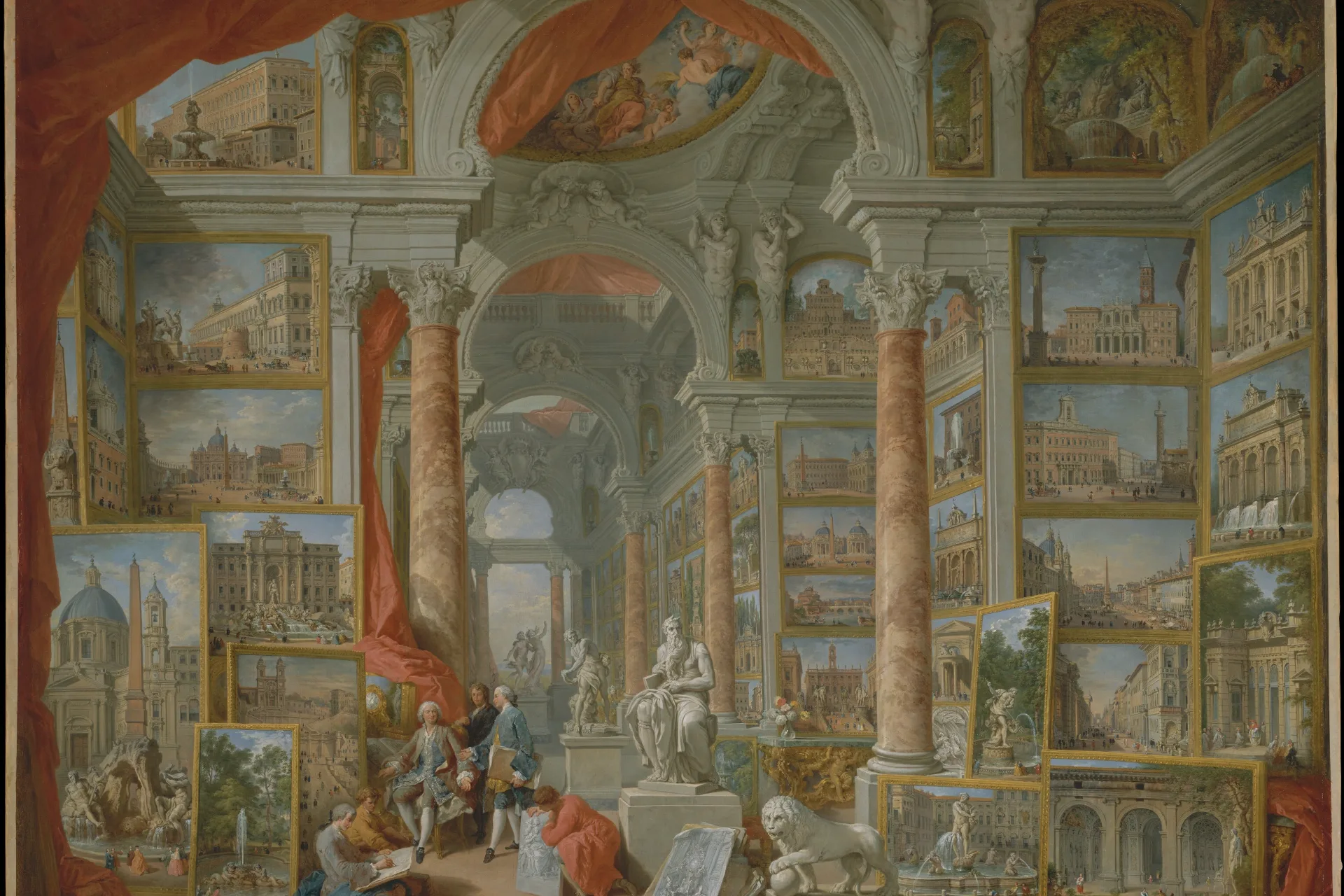
Ask a teenage boy to spend an afternoon at an art museum and you may get the look usually reserved for a request to clean the garage. That is not because boys are incapable of appreciating art. It is because almost no one has taught them how to look at it. A boy who learns to see a painting well gains something that stays with him: patience, attention to detail, and a sense that beauty is worth his time.
Among the art museums in Nashville, three stand out as places where a father can teach that lesson. Here they are, followed by a simple method for making the visit stick.
The Frist Art Museum
Downtown on Broadway, beside the old Union Station, the Frist Art Museum occupies Nashville’s former main post office, an Art Deco building constructed in 1934. It opened as a museum in 2001. The Frist is a non-collecting institution, which means it has no permanent collection. Instead it presents a dozen or more rotating exhibitions a year, often borrowed from major museums around the world.
That makes it worth checking regularly. One season may bring Renaissance drawings; another, armor, photography, or modern design. Look for an exhibition that connects to something your son already cares about, whether history, war, machines, or the outdoors, and start there. The museum’s hands-on Martin ArtQuest gallery lets younger visitors try the techniques they have just seen.
Cheekwood
On Nashville’s western edge, Cheekwood is a 55 acre estate built with a fortune from Maxwell House coffee. Its limestone mansion and formal gardens were completed in 1932, and the property opened to the public as a museum and botanical garden in 1960.
For a boy, Cheekwood has the advantage of being outdoors as much as in. The gardens and sculpture trail let him walk, and the mansion shows how a wealthy Nashville family lived a century ago. Inside, the collection of American art includes the world’s largest collection of sculpture by William Edmondson, a Nashville stone carver with a remarkable story worth telling your son on the spot. Self taught, working with discarded limestone in his yard, Edmondson became the first African American artist to receive a solo exhibition at the Museum of Modern Art in New York, in 1937.
The Parthenon
The lower level of the Parthenon in Centennial Park houses a gallery of 63 American paintings donated by James M. Cowan in the late 1920s. Upstairs is the 42 foot statue of Athena and casts of the Parthenon marbles. For a boy interested in Greece, Rome, or mythology, it is the best art museum in the city.
How to look at a painting
The method matters more than the museum. Try this:
See less, better. Do not try to see everything. Pick three works in an hour. A boy who looks hard at three paintings learns more than one who glances at three hundred.
Look for a full minute before speaking. Set a timer if you have to. It will feel long. That is the point. Things appear in a painting after thirty seconds that were invisible at five.
Ask three questions. What do you see? What do you think is happening? What makes you say that? These questions, borrowed from how good teachers lead discussions, force him to connect his opinions to evidence.
Let him choose one. Before you leave, ask him to pick the work he would take home if he could, and to tell you why. You will learn something about your son.
Sketch. Bring a small notebook and pencil. Drawing a painting, even badly, requires a quality of attention nothing else does.
Why it matters for a boy
There is an idea, common among boys and many men, that beauty is soft, and that real men care about useful things. The classical tradition taught the opposite. Plato believed the young should be raised among beautiful things so that they would come to love what is good. Our essays on how art, beauty, and music rewire your soul for greatness and choosing beauty make that case in full.
A boy who learns to stand in front of a great painting and really see it has learned a discipline that will serve him everywhere else. For another way to train his eye, try the architecture lesson in our guide to the Tennessee State Capitol.
From the Meriwether archive: Aesthetic Ethos: The Art of Menswear and Cultural Beauty.