The Orators ClubA Public Speaking Club for Men in Nashville
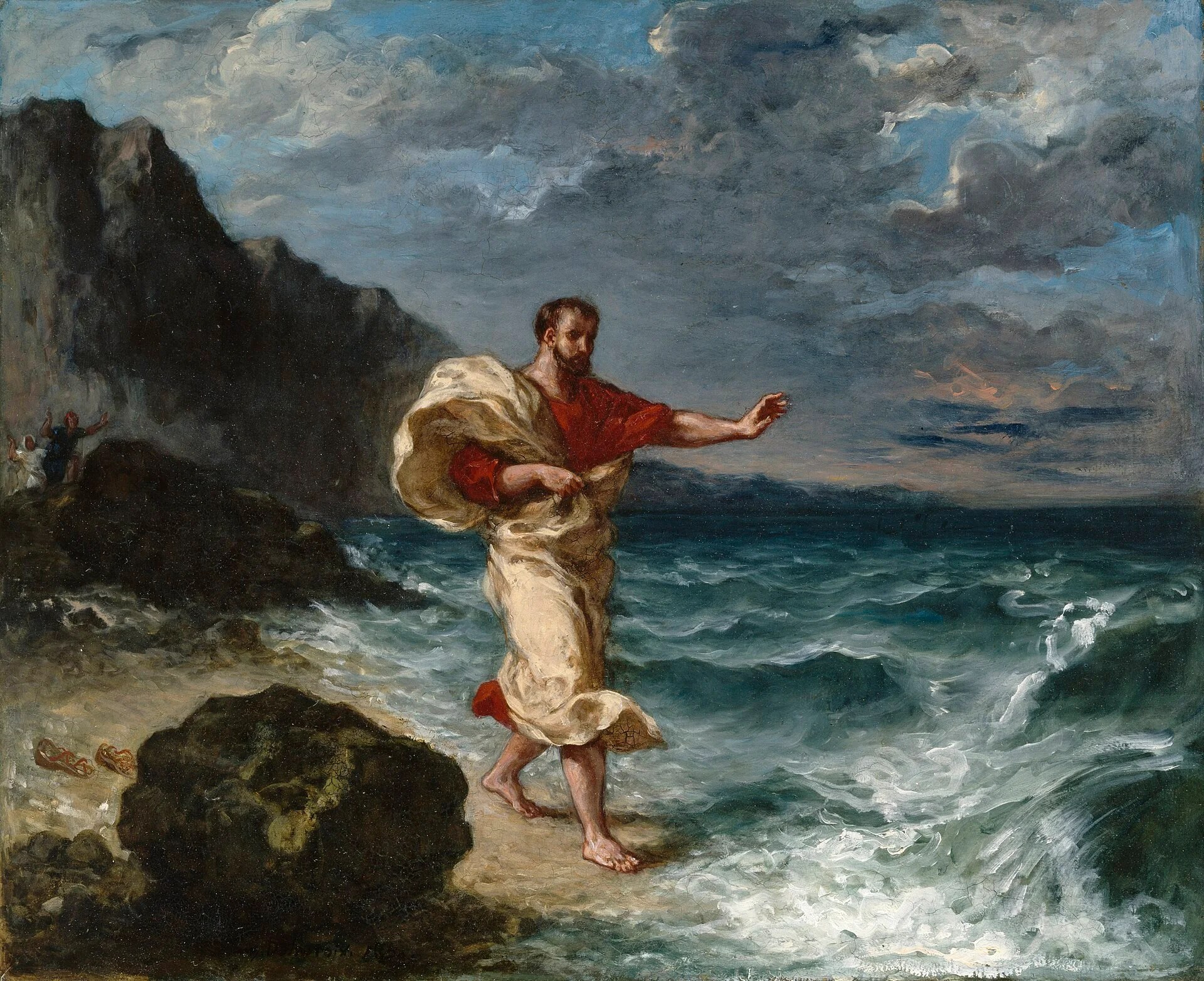
Demosthenes trained his voice against the roar of the sea. Cicero held the Roman Senate with a single question. We are gathering the men of Nashville who intend to learn to speak like them.
Join the CorrespondenceThe Nashville chapter is being organized now. Meeting place, schedule and first session will be announced soon. Join our correspondence to hear first.
Where Nashville men learn to speak well
Most men will be asked to stand and speak at the moments that matter most: a toast at a son’s wedding, a eulogy for a father, a pitch to investors, a word of conviction at a church, a school board or a city council meeting. Few men are ever trained for those moments. The Orators Club exists to train them.
The Orators Club is Meriwether Academy’s public speaking club for men in Nashville, Tennessee. It joins the practical work of a modern speaking club (prepared speeches, impromptu remarks, honest critique from peers) to the oldest and most successful curriculum in the history of persuasion: the classical rhetoric of Athens and Rome. We study the methods of Demosthenes and Cicero, recite the great speeches of the Western tradition, and then stand up and practice, week after week, in the company of men who want the same thing.
That conviction runs through all of Meriwether Academy’s work. Our Men’s Book Club reads Plutarch together every week; our lecture series brings scholars to Nashville to speak on history and philosophy. The Orators Club takes the next step. It asks men not only to read and listen, but to speak.
Trained by Demosthenes & Cicero
Antiquity’s two greatest orators were not born speakers. Both were made. Their stories, preserved for us by Plutarch, are the founding curriculum of the Orators Club.

Demosthenes, the orator who made himself
Plutarch tells us that the young Demosthenes had a weak voice, an indistinct way of speaking and a shortness of breath that broke his sentences apart. His first speeches before the Athenian Assembly were laughed down. Rather than quit, he went to work. He spoke with pebbles in his mouth to force clear pronunciation, declaimed while running uphill to build his breath, rehearsed before a large mirror, and practiced on the shore so that his voice would carry over the noise of the sea.
The man who was jeered from the platform became the voice of Athenian liberty against Philip of Macedon. His lesson for every nervous speaker is simple: the voice can be trained. Read Plutarch’s Life of Demosthenes.
Asked what was the first thing in oratory, he answered: delivery. The second? Delivery. The third? Delivery.The tradition of Demosthenes

Cicero, the master of the art
Marcus Tullius Cicero was a provincial outsider with no famous ancestors, a frail constitution and a voice he strained by forcing it too hard. He traveled to Greece and Rhodes to study under the best teachers of rhetoric and returned to Rome, by Plutarch’s account, a changed speaker: calmer in his delivery and far more powerful.
He rose to the consulship on the strength of his tongue, broke the conspiracy of Catiline with four speeches, and wrote the treatises that taught Europe to speak for the next two thousand years. His lesson: eloquence is an art with rules, and a man who learns the rules can master it. Read Plutarch’s Life of Cicero.
Quo usque tandem abutere, Catilina, patientia nostra? (How long, Catiline, will you abuse our patience?)Cicero, First Oration Against Catiline
The five canons of rhetoric
Roman teachers divided the orator’s craft into five parts, set out in Cicero’s early treatise On Invention and the Rhetorica ad Herennium. Two thousand years later they remain the most complete map of public speaking ever drawn. Every session of the Orators Club works on at least one.
Invention
Finding what to say: the arguments, examples and proofs that fit the audience and the occasion.
The five canonsArrangement
Putting it in order, from the opening that wins the room to the closing that moves it.
Structure a speechStyle
Choosing words that are clear, fitting and memorable, plain when they should be and grand when they must be.
Think on your feetMemory
Holding the speech in the mind so the speaker can look at the audience instead of his notes.
Memorize a speechDelivery
Voice, posture, gesture and presence: the canon Demosthenes ranked first, second and third.
Train your voiceAn evening at the Orators Club
The Nashville chapter is still being organized, and the final format will be announced with the first meeting. Here is the shape of the evening we are building.
A great speech, spoken aloud
Each meeting opens with a member delivering a passage from the tradition: Pericles over the Athenian dead, Cicero against Catiline, Patrick Henry in Richmond, Lincoln at Gettysburg. Speaking great words is how a man learns the rhythm of great speech.
A short lesson in classical rhetoric
A brief teaching on one technique from the ancient handbooks: the six parts of a speech, the memory palace, the three appeals of Aristotle, the training of the voice. Then we put it to work the same night.
Prepared speeches
Members take the rostrum to deliver prepared speeches that build in length and difficulty over time, from a two-minute introduction to a full persuasive address, a toast or a eulogy.
Impromptu speaking and honest critique
Every man is called on to speak without preparation on a question drawn from history, philosophy or the news. Each speech then receives direct, generous and specific critique from the brothers in the room.
Format, meeting place and schedule will be confirmed when the Nashville chapter launches. Join the correspondence for the announcement.
The orator must teach, he must delight, and he must move.After Cicero, on the three duties of the orator
For men who intend to lead
The Orators Club is for any man in Nashville who wants to speak with clarity, conviction and composure. No experience is required. The man who dreads speaking will find patient brothers who started where he is; the man who already speaks well will find a standard high enough to keep him growing.
- Professionals who present, pitch, sell or lead teams
- Fathers who want to speak well at the table, the wedding and the graveside
- Men who serve in churches, lodges, civic boards and local politics
- Young men preparing for careers in law, ministry, business or public life
- Any man who has ever sat down after speaking and wished he had said it better

How the Orators Club differs
Nashville already has several good places to practice speaking, including a number of Toastmasters clubs that meet across the city and serve their members well. The Orators Club is built for men who want something particular: a brotherhood, a classical curriculum and a standard drawn from the greatest speakers in history.
| The Orators Club | A typical speaking group or class | |
|---|---|---|
| Membership | Gentlemen only, a fellowship of men | Usually mixed, often workplace based |
| Curriculum | Classical rhetoric: the five canons, Aristotle’s appeals, the memory palace, the six parts of a speech | Modern manuals, project checklists or a single workshop |
| Models | Demosthenes, Cicero, Pericles, Lincoln and the great speeches of the West | Modern business and motivational speakers |
| Community | Part of Meriwether Academy’s book clubs, dinner lectures and wilderness expeditions | Meetings only |
| Purpose | Eloquence in the service of virtue and leadership | Confidence and career skills |
Public speaking lessons from the ancients
Practical guides written for the Orators Club. Read them now, and bring the techniques to the first meeting.
How to Overcome the Fear of Public Speaking
What the stammering young Demosthenes teaches every nervous speaker.

The Five Canons of Rhetoric
Cicero’s complete map of the speaker’s art, and how to use it this week.

Voice Exercises for Public Speaking
Pebbles, hills and the sea: the Demosthenes method for a stronger voice.

How to Memorize a Speech
The memory palace of Simonides and the Roman orators, step by step.

How to Structure a Speech
The classical six-part speech, from exordium to peroration.

Impromptu Speaking: How to Think on Your Feet
Commonplaces, copia and a simple frame for speaking without notes.
From the archive: Pericles’ Funeral Oration Philosophers vs. Sophists Speak Like a Man Teaching Rhetoric to Teenagers
Be among the first to take the rostrum
The Nashville chapter of the Orators Club is in development. Leave your name and contact details and we will write to you as soon as the meeting place, schedule and first session are announced. Founding members will help shape the club from its first night.
No cost and no obligation. We will only write about the Orators Club and Meriwether Academy gatherings in Nashville.
Nashville public speaking club FAQ
Is there a public speaking club in Nashville just for men?
Yes. The Orators Club is Meriwether Academy’s public speaking club for men in Nashville, Tennessee. The Nashville chapter is in development now, and the meeting place, schedule and first session will be announced soon. Join the correspondence on this page to be notified first.
When and where will the Nashville chapter meet?
Details will be announced soon. The meeting place and schedule will be sent to everyone on the correspondence list before the first meeting.
Do I need public speaking experience to join?
No. The club is built for men at every level, including men who are afraid of public speaking. Demosthenes himself was laughed off the platform the first time he spoke. Every member starts with short speeches and builds from there.
How is the Orators Club different from Toastmasters?
Toastmasters clubs in Nashville offer valuable practice, and many men benefit from them. The Orators Club differs in three ways: it is a fellowship of men, it teaches from the classical rhetoric of Demosthenes, Cicero and Aristotle, and it belongs to the wider Meriwether Academy community of book clubs, dinner lectures and wilderness expeditions.
What will we practice at meetings?
The planned format includes recitation of great speeches, a short lesson in classical rhetoric, prepared speeches, impromptu speaking and direct critique from fellow members. The final format will be confirmed when the chapter launches.
What does it cost to join?
Membership details, including any dues, will be announced with the chapter launch. Joining the correspondence list is free and carries no obligation.
Who can join the Orators Club?
Any man who wants to become a better public speaker: professionals, fathers, students, ministers, civic leaders and anyone who must speak when it matters. The club is gentlemen only.
What is Meriwether Academy?
Meriwether Academy is a Nashville-based classical education nonprofit, a 501(c)(3), that runs men’s book clubs, dinner lectures, study clubs and wilderness expeditions for men and boys, with the long-term goal of founding a classical boys’ boarding school in Tennessee.