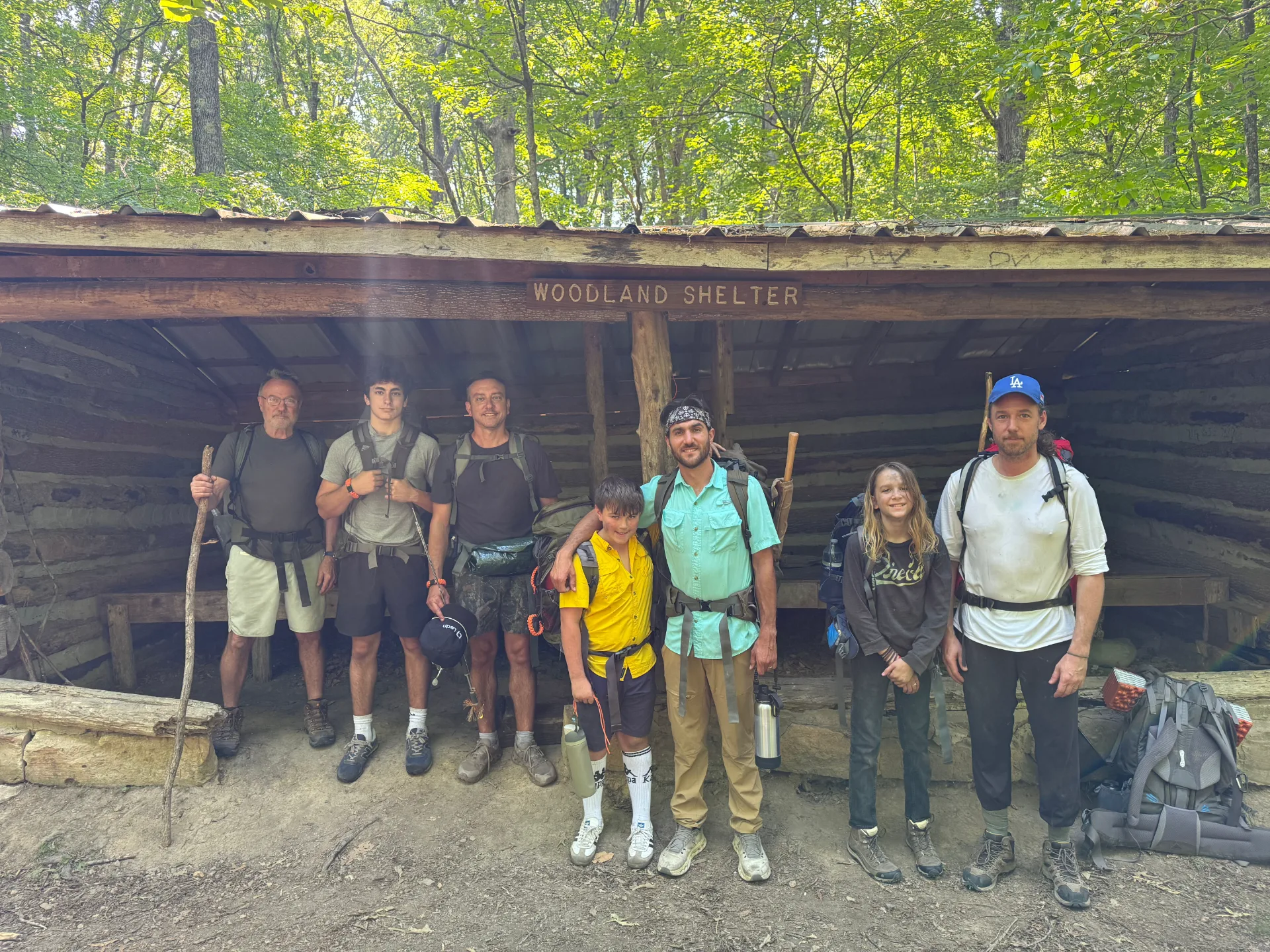
Ask a man over fifty about his childhood summers, and he will probably describe days spent outdoors with little supervision: creeks, woods, bikes, forts, and coming home when the streetlights came on. Ask a boy today, and the answer is likely to involve a screen. Something has changed in how boys grow up, and in 2005 a writer named Richard Louv gave it a name.
Where the idea came from
In his book Last Child in the Woods, Louv introduced the phrase “nature-deficit disorder” to describe the costs of children’s growing disconnection from the natural world. According to the standard summary of the idea, Louv made clear that he used the word “disorder” as a metaphor, not a medical diagnosis. It does not appear in the major diagnostic manuals, and it should not be treated as a clinical condition.
Louv pointed to several causes: parental fear, especially of strangers, loss of accessible natural areas, and the pull of indoor entertainment. The phrase caught on because so many parents recognized what it described.
What the research suggests
It is worth being careful here. The research on children and nature is still developing, and not every claim made in its name is well supported. But a body of studies, summarized in the same overview, suggests real benefits from time in natural settings, including relief from mental fatigue, though one well known experiment on that point failed to replicate. A study of 276 Edinburgh children found that those who used green space more had higher self esteem scores, an association its authors said still needs longitudinal research to confirm. Researchers have also noted associations between highly urban environments and certain health problems.
There are also critics. One of them, Elizabeth Dickinson, a communication scholar at the University of North Carolina, argued in a 2013 paper in Environmental Communication that framing the problem as a children’s disorder misses the deeper issue, which lies with adult habits and cultural practices. That criticism is worth taking seriously, because it puts the responsibility where it belongs: not on the boy, but on the adults who shape his days.
Signs a boy needs more time outside
Because nature deficit disorder is not a diagnosis, there is no checklist that proves a boy has it. But most fathers can recognize the pattern in their own homes. A few questions worth asking honestly:
- Can he name three trees, three birds, or three animals that live within a mile of your house?
- Has he waded in a creek, climbed a tree, or built a fort in the last month?
- Does he know what to do with himself outdoors without a ball, a device, or an adult directing him?
- Is he restless and irritable after a long stretch indoors, and calmer after time outside?
If the answers trouble you, you are not alone, and the remedy is not complicated.
What fathers already know
Whatever the studies say, most fathers know from experience what happens when a restless boy gets outside. He runs, climbs, builds, explores, and comes home tired in the right way. He learns things about risk, weather, animals, and his own body that no classroom can teach. We make the full case in our essay on what wilderness education teaches.
How to give him the outdoors back
Make outside the default. Set a household expectation that after school and on weekends, boys go out unless there is a reason not to.
Allow some freedom. Within reason and age appropriate limits, let him roam a little farther than feels comfortable. The best outdoor experiences are not always supervised activities.
Go with him. Start with easy trails near home. Our guides to day hikes near Nashville, waterfalls near Nashville, and canoeing near Nashville offer plenty of options.
Give him skills. A boy who can build a fire, tie knots, and use a map is more at home outside. See our guides to building a fire and map and compass.
Limit screens deliberately. Time outdoors does not just happen when screens are available. Our guide to screens and teenage boys has practical ideas.
Sleep out. Nothing reconnects a boy to the natural world like a night under the sky. Start in the backyard, then graduate to a father and son camping trip.
A father’s opportunity
The good news in Louv’s argument is that the remedy is simple and within every family’s reach. It does not require money, special programs, or expertise. It requires a father willing to go outside with his son, and to keep going. Meriwether Academy’s father and son trips, listed on our events page, are one way to start. A trail near your house on Saturday morning is another.
From the Meriwether archive: 5 Tennessee State Parks to Explore This Spring.