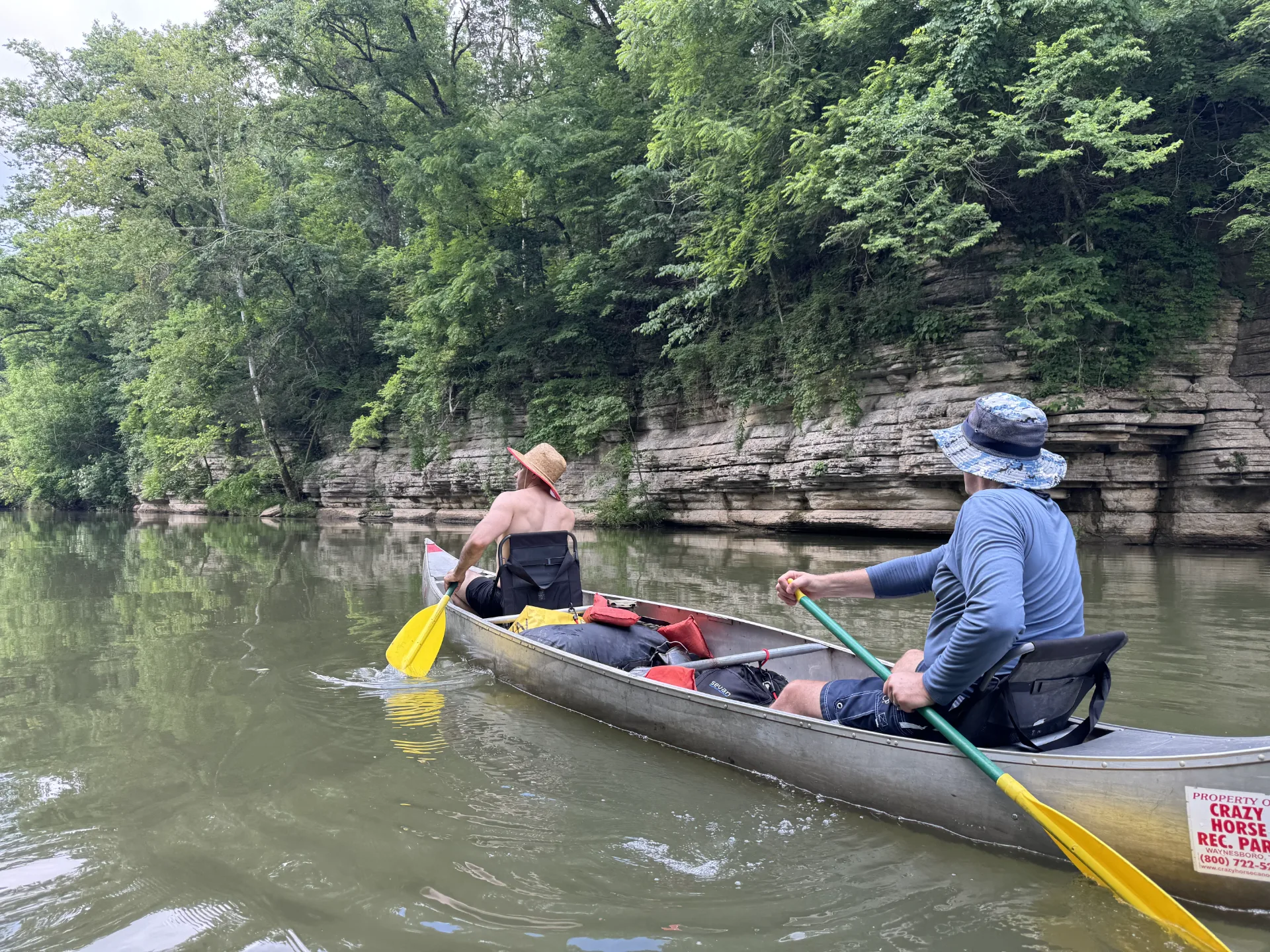
Two people in a canoe cannot pretend to cooperate. If the man in the stern and the boy in the bow are not working together, the boat goes in circles, and everyone on the riverbank can see it. That is exactly why a canoe is one of the best places to teach a son teamwork, patience, and the habit of paying attention. Canoeing near Nashville is also easy to start, because Middle Tennessee is full of rivers that are gentle enough for a beginner and beautiful enough to be worth the trip.
Start close: the Harpeth River
The Harpeth runs west of Nashville through Williamson, Davidson, and Cheatham counties, and a stretch of it is protected in Harpeth River State Park, a string of sites along the lower river near Kingston Springs. Outfitters along Highway 70 rent canoes and run shuttles during the warm months, which means your first trip can be as simple as showing up, paddling downstream, and getting a ride back to your car.
The park’s best known site is the Narrows of the Harpeth, where the river makes a long loop and comes back within a few hundred feet of itself. In 1818, the ironmaster Montgomery Bell cut a tunnel through the ridge between the two sides of that loop to power a forge. The tunnel is still there. Paddle past it, then hike the short trail to the bluff overlook, and you have a lesson in geography, engineering, and early Tennessee industry in a single afternoon.
Go farther: the Buffalo River
About two hours southwest of Nashville, the Buffalo is a long, undammed river, and it is where many Middle Tennessee families graduate from day trips to overnights. Gravel bars make natural campsites, and the water is clear enough to watch fish under the boat.
Meriwether Academy has run overnight canoe voyages on the Buffalo for men and boys. Warren Steury’s account of one, A Night on the Buffalo River, captures the spirit of it. What he tells attendees is simple: “comfort is not guaranteed, but memories are!” That is a good motto for any first river trip.
What Tennessee law requires
Before you launch, know the rules. According to the Tennessee Wildlife Resources Agency, every boat, including canoes and kayaks, must carry a wearable life jacket for each person aboard, and all children 12 and younger must wear a Coast Guard approved life jacket while under way. Our advice is simpler: everyone wears one, every time, including you. A boy learns more from watching his father buckle his own life jacket than from any lecture on water safety.
Other good habits:
- Check the water level and weather. Rivers rise fast after rain. If the water is brown, high, and fast, go another day.
- Tell someone your plan. Put in point, take out point, and expected return time.
- Dress for the water, not the air. In spring and fall, the water can be far colder than the day feels.
- Pack a dry bag with a change of clothes, a first aid kit, water, and food.
Teaching a boy to paddle
The traditional arrangement puts the stronger, more experienced paddler in the stern, where the steering happens, and the boy in the bow. That works for a first trip. But the goal is to move him to the stern as soon as he is ready, so he learns to read the river and steer the boat himself.
A few things to teach, in order:
1. The forward stroke. Paddle blade fully in the water, pulled back alongside the boat, not across it. 2. Switching sides on command. The bow paddler switches when the stern paddler calls it. This teaches listening and timing. 3. Reading the water. A V of smooth water pointing downstream usually marks the channel. Ripples and boils mark rocks. Teach him to spot both before you reach them. 4. The J stroke. Once he is in the stern, this is the stroke that keeps a canoe straight without switching sides. It takes practice, and practice is the point.
Expect to spin in circles at least once. Laugh about it. The boy who learns that mistakes on the water are normal and fixable has learned something more important than any stroke.
From day trip to overnight
Once your son can paddle a few hours without complaint and handle the bow on his own, an overnight becomes possible. The planning is similar to a first camping trip, which we cover in our guide to a father-son camping trip near Nashville, with one added rule: everything goes in a dry bag, and everything gets tied in.
The river has a way of slowing a boy down. There is no screen, no schedule, and nowhere to be but the next bend. Our essay on wilderness education explains why that matters so much, and our guide to teaching your son to fish in Middle Tennessee pairs naturally with a day on the water.
When Meriwether schedules its next river trip, it will appear on the events page. Until then, pick a warm Saturday, rent a canoe on the Harpeth, and see how far the two of you get before you stop going in circles.
From the Meriwether archive: The Wild Whisper: Unlocking the Psychological Perks of Solitude in Nature.