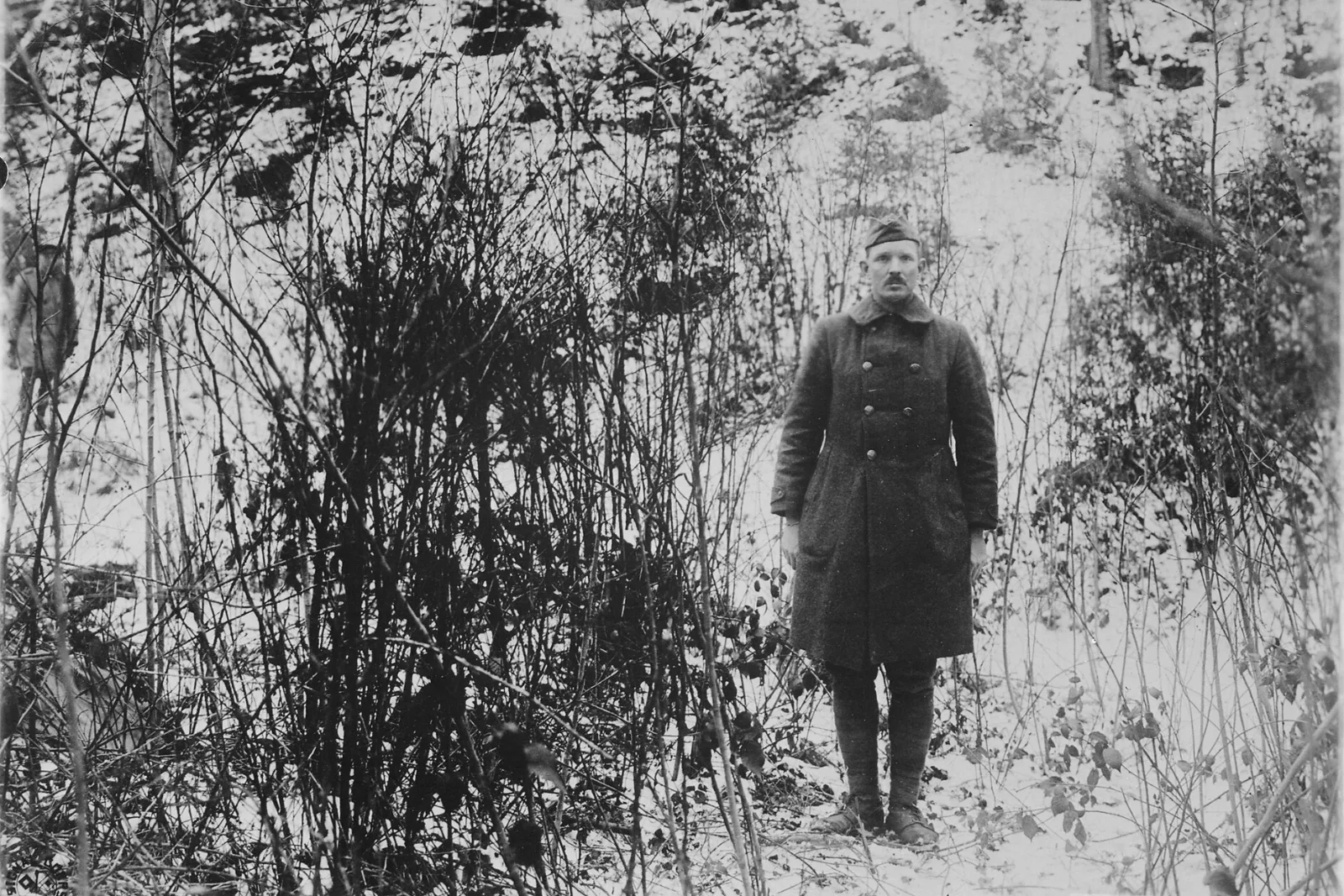
In the fall of 1918, a sharpshooter from the hills of Fentress County, Tennessee, did something so improbable it still reads like fiction. Alvin York became one of the most celebrated American soldiers of the First World War. What makes his story worth telling a boy, though, is not only what he did in France. It is who he was before he went, how he wrestled with whether he should go at all, and what he did with the fame that followed.
A rough start
Alvin Cullum York was born on December 13, 1887, in the valley now called Pall Mall, near the Kentucky line. According to his biography, his family was poor, his schooling was minimal, and he grew up farming, hunting, and working for wages. As a young man he drank hard and fought in saloons.
At a revival meeting at the end of 1914, he was converted. On January 1, 1915, he joined a small church that opposed violence, and his life turned around.
Should a Christian fight?
When he was drafted in 1917, York wrote on his registration card that he did not want to fight. He was not a coward. He was a serious man who took his faith seriously and was not sure it allowed him to kill. In the Army, his commanders talked with him about Scripture and duty, and after long reflection he concluded that he could serve with a clear conscience.
This is the part of the story a teenage boy most needs to hear. York did not simply follow the crowd, and he did not simply follow his feelings. He took a hard question seriously, sought counsel from older men, thought it through, and then acted on his conclusion with his whole heart. That is what a mature conscience looks like.
October 8, 1918
During the Meuse-Argonne offensive in France, York was one of seventeen men sent to silence German machine guns that were cutting down American troops. The patrol got behind the German line and took prisoners, but then came under heavy fire that killed six Americans. With the others pinned down, York engaged the machine gun positions himself.
By the time the fighting stopped, according to the record summarized in his biography, York had killed at least 25 German soldiers and, with the survivors of his patrol, marched 132 prisoners back to the American lines. He received the Medal of Honor and decorations from several allied nations.
What he did with fame
York came home a national celebrity. He was offered money, endorsements, and business deals. He turned down many of them. He married his sweetheart, Gracie Williams, in 1919 and went home to the mountains.
The Rotary Club of Nashville raised money to buy the couple a farm, and York spent much of his remaining life working to bring education to the children of rural Tennessee. He founded a foundation for the purpose and helped establish the York Agricultural Institute in Jamestown, which opened in 1929. When Hollywood finally persuaded him to allow a film of his life, the 1941 movie Sergeant York, some of the proceeds helped build a Bible school on his land. Gary Cooper won the Academy Award for playing him.
York died in Nashville in 1964 and is buried in the Wolf River Cemetery in Pall Mall.
Visiting Pall Mall
The Sgt. Alvin C. York State Historic Park preserves his home, the gristmill on the property, the general store and post office he established, and the nearby cemetery where he is buried. It sits in the Wolf River valley of Fentress County, in the northern Cumberland Plateau. Check Tennessee State Parks for hours before you go.
It is a long drive from Nashville, but it pairs well with a weekend on the plateau. Pickett CCC Memorial State Park and the Big South Fork are both in the region, as we note in our guide to backpacking near Nashville.
Lessons for a boy
- Conversion is real. A man who drank and brawled became a man of steady faith and discipline. No boy is locked into who he was at nineteen.
- Conscience deserves work. York’s doubts were honest, and he resolved them honestly. Teach your son to take moral questions seriously and to seek wise counsel.
- Courage is often a response to duty. York did not go looking for glory. He did what the moment required.
- Fame is a test. York passed it by turning away from wealth and toward service to his neighbors.
For more on how to raise a boy who can face fear, see our piece on the four cardinal virtues. For more Tennessee history within reach of a weekend drive, see our guide to Civil War battlefields near Nashville.