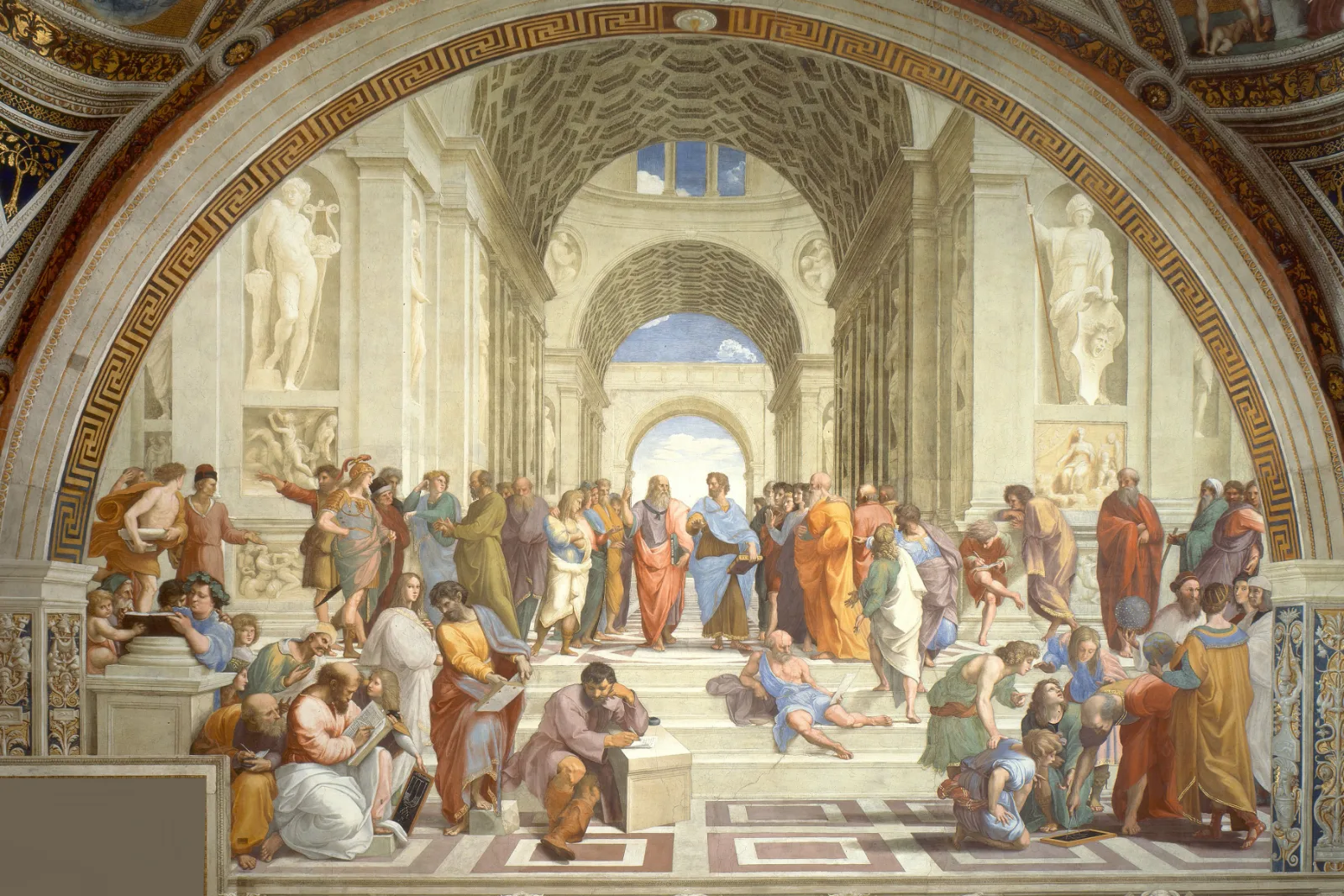
A boy growing up in Tennessee today inherits a great deal without knowing it. The idea that he has rights no king can take, that his conscience is his own, that a trial requires evidence and a jury, that the natural world can be understood by reason, that a man’s worth is not fixed by his birth. None of these ideas is universal. Each was worked out, at great cost, over three thousand years in a particular part of the world, and each could be lost again.
The study of Western civilization is the study of how those ideas came to be. Schools have mostly stopped teaching it as a single story, breaking it instead into disconnected units or replacing it with surveys of world cultures that give a boy a little of everything and the shape of nothing. The loss is serious, and it falls hardest on boys, who are drawn to grand narrative and are left without one.
What the story is
Told simply, it runs like this. The Hebrews gave the West the idea of one God who made the world and cares how men live, and with it the idea that history has a direction. The Greeks gave it reason, philosophy, the examined life, and the first experiments in self-government. Rome gave it law, order, the republic, and the memory of a republic’s fall. Christianity joined the Hebrew and Greek inheritances and added the dignity of every soul. The medieval centuries built universities, cathedrals, and the long argument between church and crown from which limited government emerged. The Renaissance recovered the ancients; the Reformation shattered the unity of Christendom and, without meaning to, made room for conscience. The scientific revolution turned reason on nature. The English tradition of law and parliament crossed the Atlantic and became, in 1776 and 1787, the American founding.
A boy who has that outline in his head can place nearly anything he encounters. A boy who lacks it is at the mercy of whoever tells him what to think about the past.
Why boys should study Western civilization
Boys want to belong to something larger than themselves, and they want that something to have heroes and a cause. Western civilization, honestly taught, gives them exactly that: Leonidas at Thermopylae, Cicero against Antony, Athanasius against the world, Charles Martel at Tours, Washington at Trenton. It also gives them the villains, the failures, and the tragedies, which boys need just as much.
It gives them their own country’s meaning. The American founding is unintelligible without Greece, Rome, and England; the founders themselves said so constantly. A boy who knows the story understands why the Constitution reads as it does and what the founders feared.
And it gives them something to defend. Civilizations are not permanent. A boy who knows how hard-won his freedoms were, and how many civilizations have lost theirs, is less likely to take them lightly.
The honest objections
Critics say the story flatters the West and ignores its crimes. That would be true of a dishonest telling, but the honest telling includes the crimes, because the West itself has been its own sharpest critic. Slavery and its abolition, conquest and the doctrine of human rights, religious persecution and religious liberty: the tradition contains both the wrong and the argument against it, and a boy should learn both.
Others say the story is Eurocentric. It is centered on Europe because that is where these particular ideas came from, in the way that a study of Confucian thought is centered on China. Studying one’s own civilization first is not a prejudice against others. It is the precondition for understanding them.
How a family can teach it
Teach it in order, from the ancient Near East and Greece forward. Our guide to teaching history to a teenage boy explains the method.
Teach it through the books that made it. Homer, Plutarch, the Bible, Augustine, Shakespeare, the Federalist. A boy who has read even portions of these has met the civilization directly. Our explanation of the Great Books approach and our reading list for teenage boys point the way.
Teach it through the lives of men. Plutarch was written for this; see our beginner’s guide.
Teach it on the ground where possible, from the Parthenon in Centennial Park to the battlefields of Middle Tennessee.
And argue about it. The story of the West is a story of arguments, and a boy joins it by taking sides.
Where Meriwether stands
Meriwether Academy exists to pass this inheritance to boys and men. It is why our book club reads Plutarch, why our dinner lectures bring scholars to Nashville to speak on the history, philosophy, and literature of the West, and why the school we are working to found will teach the story whole. Upcoming lectures are listed on our events page; the essays on this site, from the funeral oration of Pericles onward, are the same work in written form.