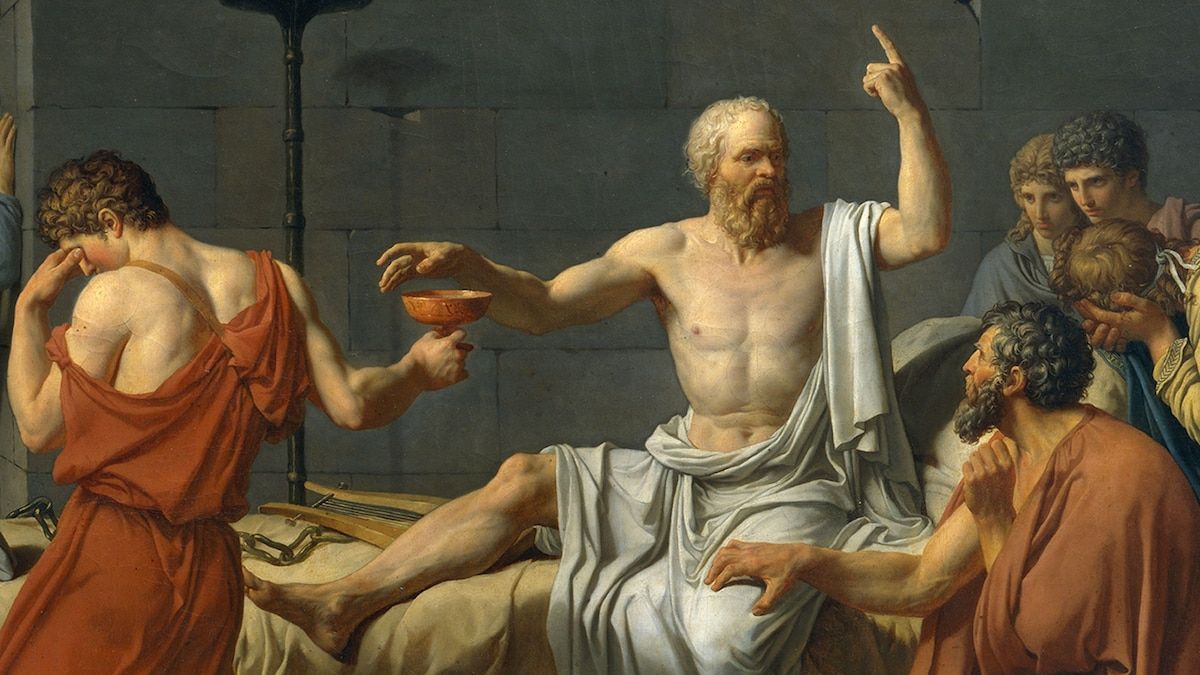
What made Socrates such an incredible man?
This was one of the many great topics I had the privilege of discussing with N. Warren Steury today at this week’s Meriwether Academy study group.
Socrates is often thought of as a great thinker—and he was. But more importantly, he lived a remarkable life, one that “thinkers” today do not even aspire to.
Two aspects of his life stood out in our discussion.
First, throughout Plato’s dialogues, he sets himself against the highest and allegedly wisest people of his day. In particular, he distinguishes himself, the philosopher, from the sophists and rhetoricians—people who were concerned with speaking, winning debates, and receiving honors, rather than seeking truth.
Second, Socrates was not just a great thinker, but also lived a virtuous life. While Socrates is not often thought of as an embodiment of traditional manly virtues, like courage and strength, in Plato’s Laches, he is praised by two Athenian generals for his bravery in war and sought as an authority on how to instill virtue and nobility in young boys.
In a sense, Socrates set himself against the “intellectual elite” while receiving praise from prominent generals of his day.
This led us to the more general question: what makes a great man and a great life? How should we live our lives? Is great thinking possible without living a remarkable life? Is such thinking possible without being deeply in touch with humanity and nature?
In particular, we discussed the radical technological alienation from nature that we experience in our age—is our age even capable of creating great thinkers? If Plato, Emerson, or any of the other greats that we often discuss were raised in the digital age, would they have been able to write such profound works?
Today, we often think of modern man as wiser than the ancients, that he knows and sees much more. But he also sees much less. For example, the stars—which were so powerful to the ancients and which we had the privilege of viewing clearly on the recent Meriwether outdoor retreat—are completely hidden to modern man. How does this affect our deepest thoughts and insights, our ability to reach the highest cultural peaks?
What I find so interesting about Meriwether is the attempt to recover these essential aspects of life: to build a whole man, to bring everything together, to develop virtue alongside wisdom, brotherhood alongside a connection to nature.
Please join us next week for another great discussion in Nashville!
NICK GALLO
LinkedIn | Political Philosophy Writing